Trader
Buys all $1,000 at once at $1.00
- At the bottom
- −$300
- Price is back
- $0
Just add to a pool
Money is spread across every price — only a small slice near the current one works.
LiqZilla
Money sits exactly where you want to buy and sell.
The same thousand dollars, the same market. The difference is how you buy.
Trader
LiqZilla
A position of ten levels around the price. Move the price and watch the levels buy, sell and collect fees.
The price moves on its own — grab the slider to drive it
Simplified illustration: 10 levels, $5,000 per side, 1% fee on the swapped amount. Real fees depend on the pool's trading volume.
Every level is a regular Uniswap position. But Uniswap creates them one at a time: a 20-level ladder means calculating and placing each by hand, then managing 20 positions separately.
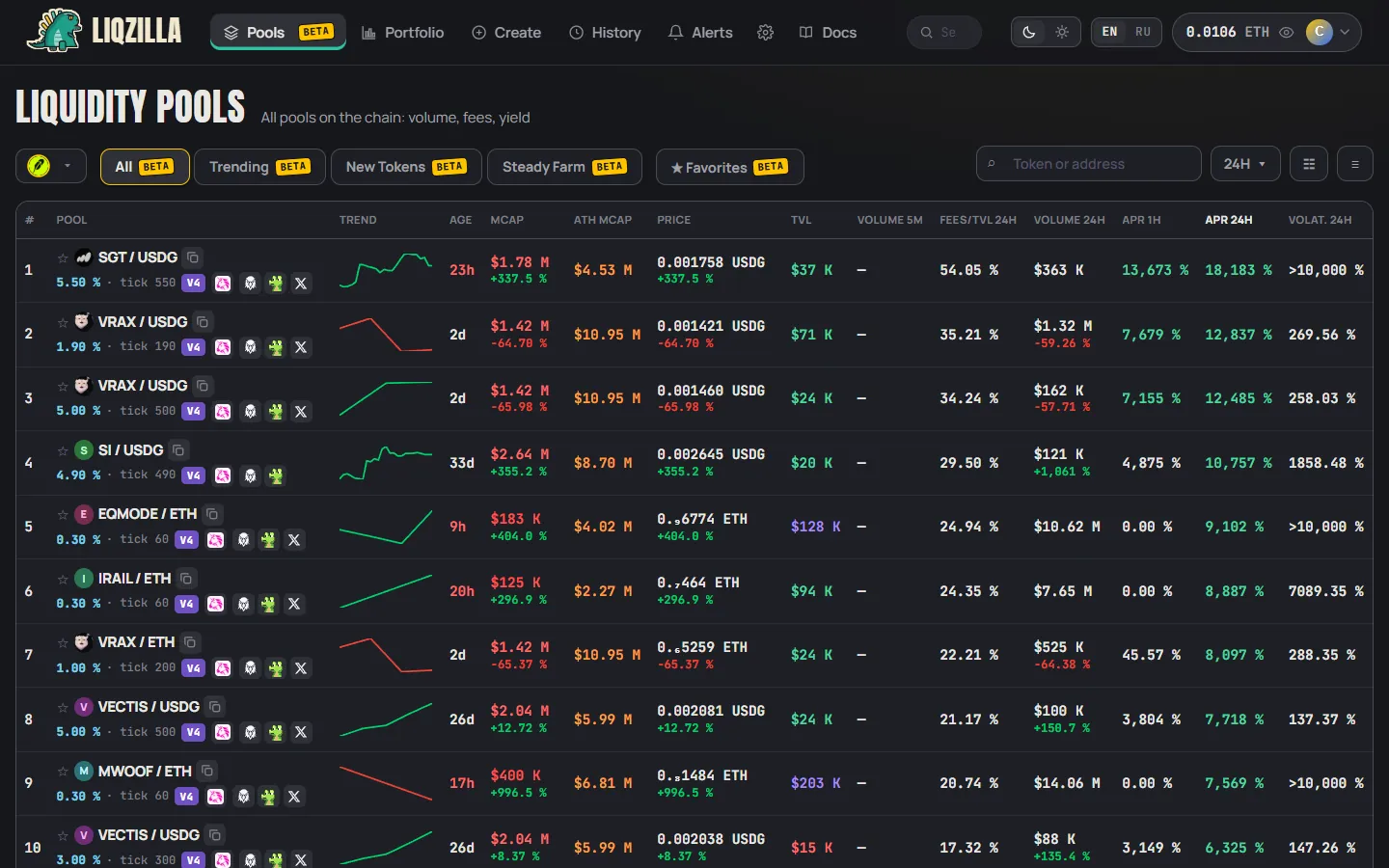
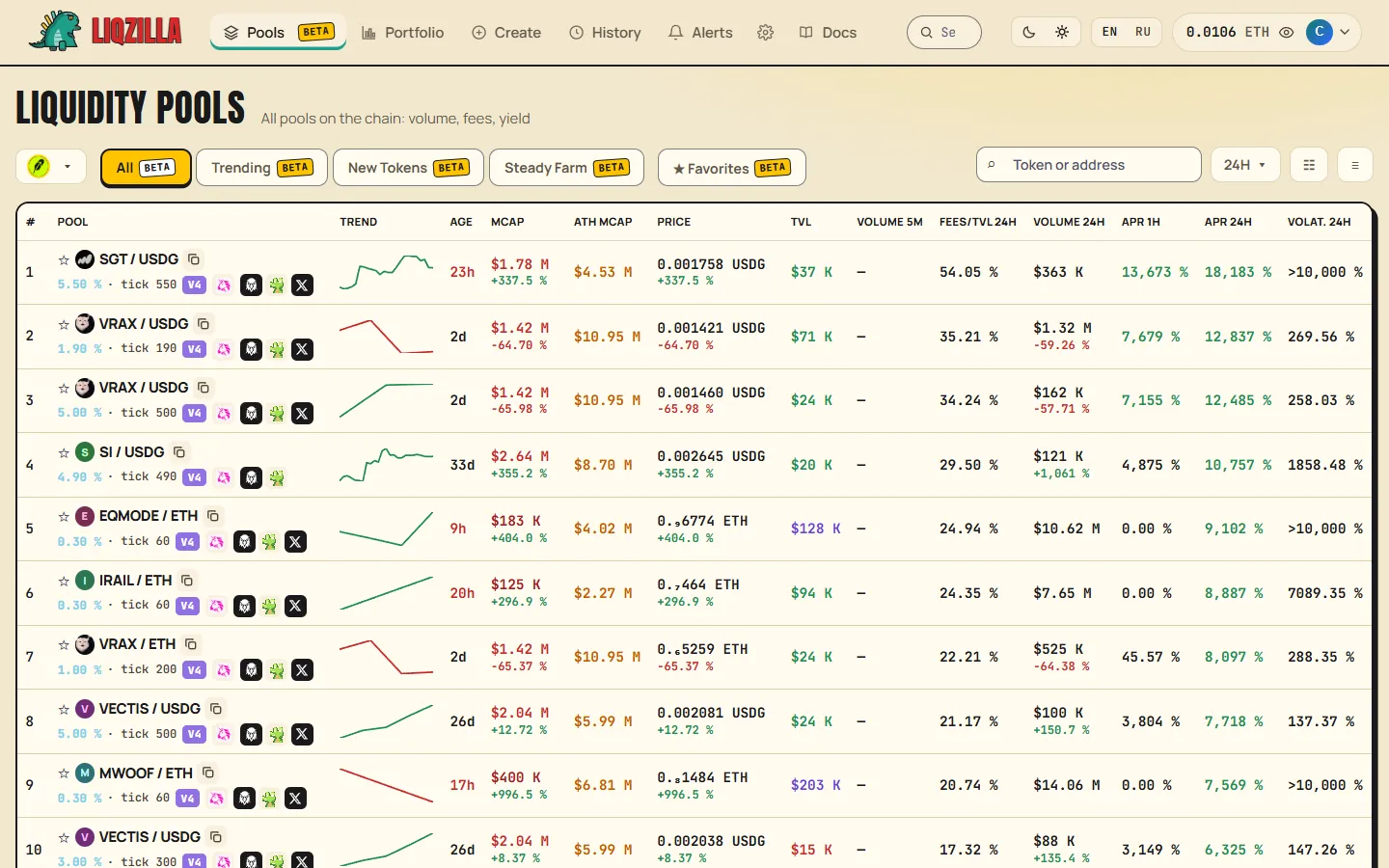
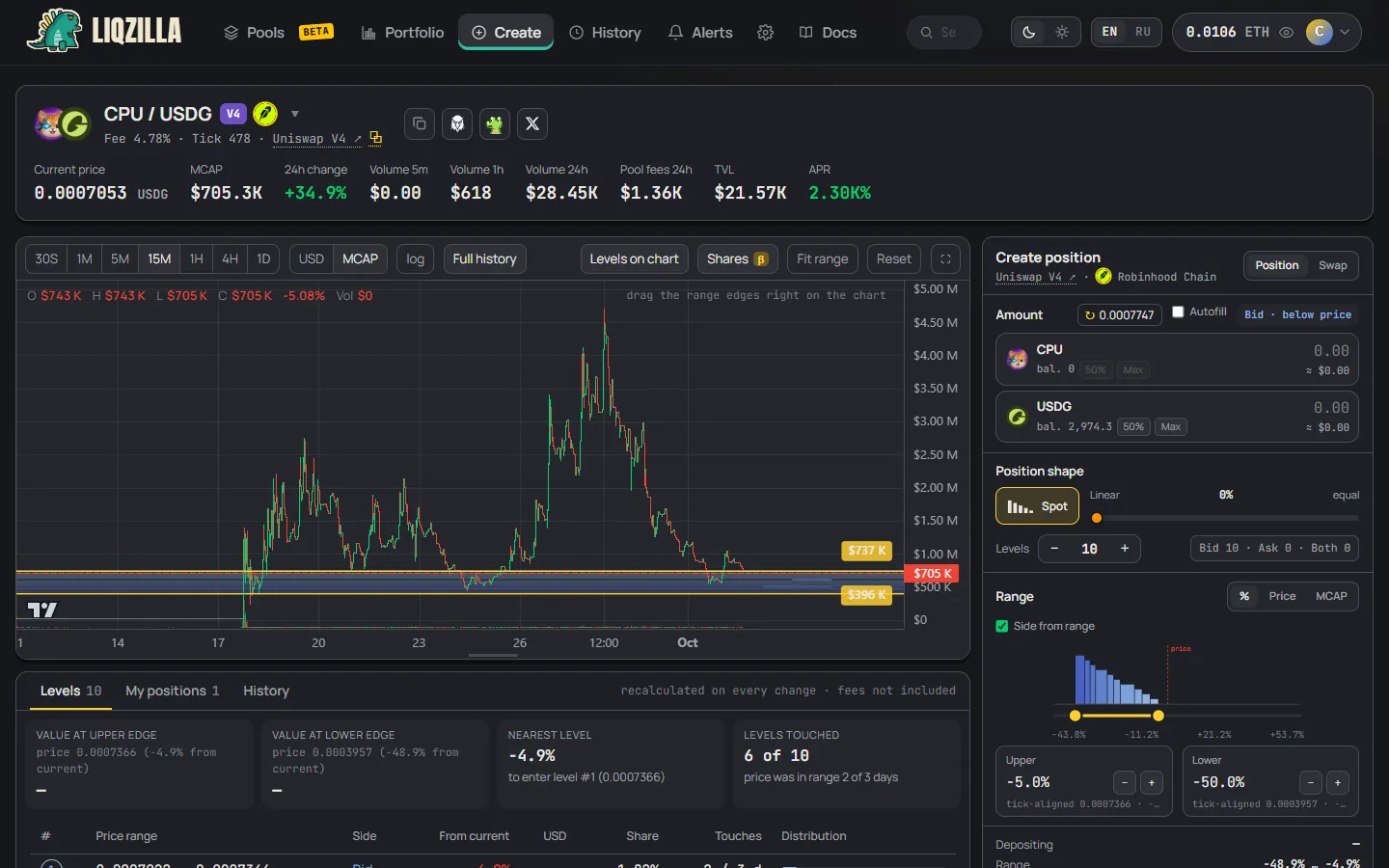
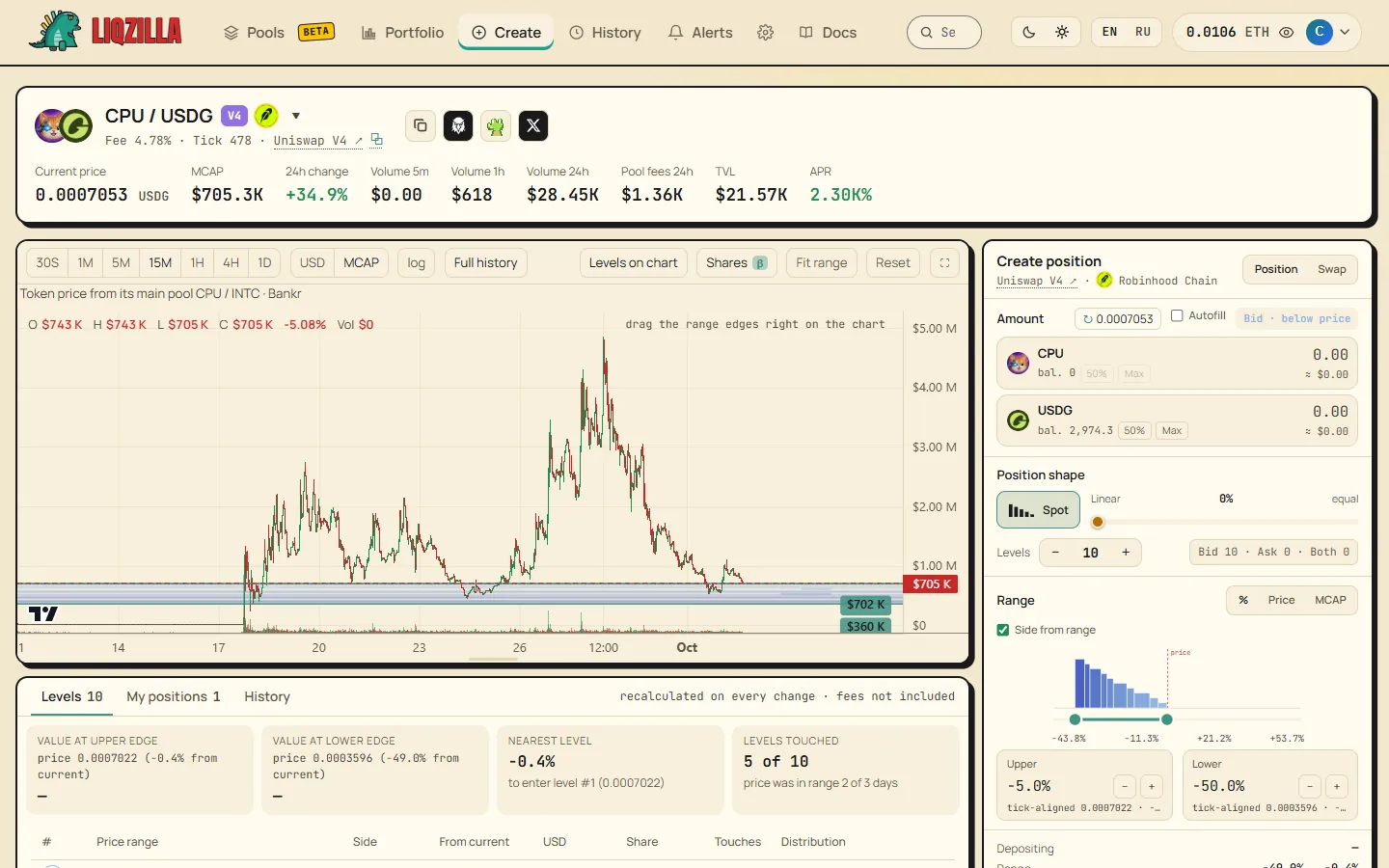
Find a pool, open a position, tune it to your liking.
One account for every network. Before a transaction your wallet switches to the pool's network — and adds it if it's missing.
 Robinhood ChainUniswap V4
 BNB ChainUniswap V4 and PancakeSwap V3
 ArcUniswap V3 and V4
 BaseUniswap V3 and V4
LiqZilla is a workspace, not a vault. Every transaction is signed by your wallet.
Yes, LiqZilla is free right now. You only pay network gas and the pools' own swap fees.
Yes — every level is a regular Uniswap position. But there you'd create each one in a separate transaction, work out prices and amounts by hand, then collect fees and close them one by one. LiqZilla places the whole grid with one signature and puts management in one window.
A level also fills at its own prices, but instead of paying for the fill you earn the pool fee. The key difference: a level stays in place after it fills — if the price comes back, it sells back. To lock in a buy, you close the level.
No. The app holds no keys and can't move funds without your signature. Every level is a Uniswap NFT position on your address, visible in Uniswap's own interface as well.
Any browser extension wallet: Rabby, MetaMask and others. If the network is missing from your wallet, the app adds it.
If the token falls and doesn't recover, the position stays in the cheaper token — that's impermanent loss, and fees don't always cover it. Only put in what you can afford to lose.